
The Hidden IT Costs Manufacturing Leaders Don’t See
Manufacturing margins are tight.
You track material costs. You monitor labor efficiency. You optimize supply chain timing.
But the most expensive inefficiencies often sit quietly in your IT environment.
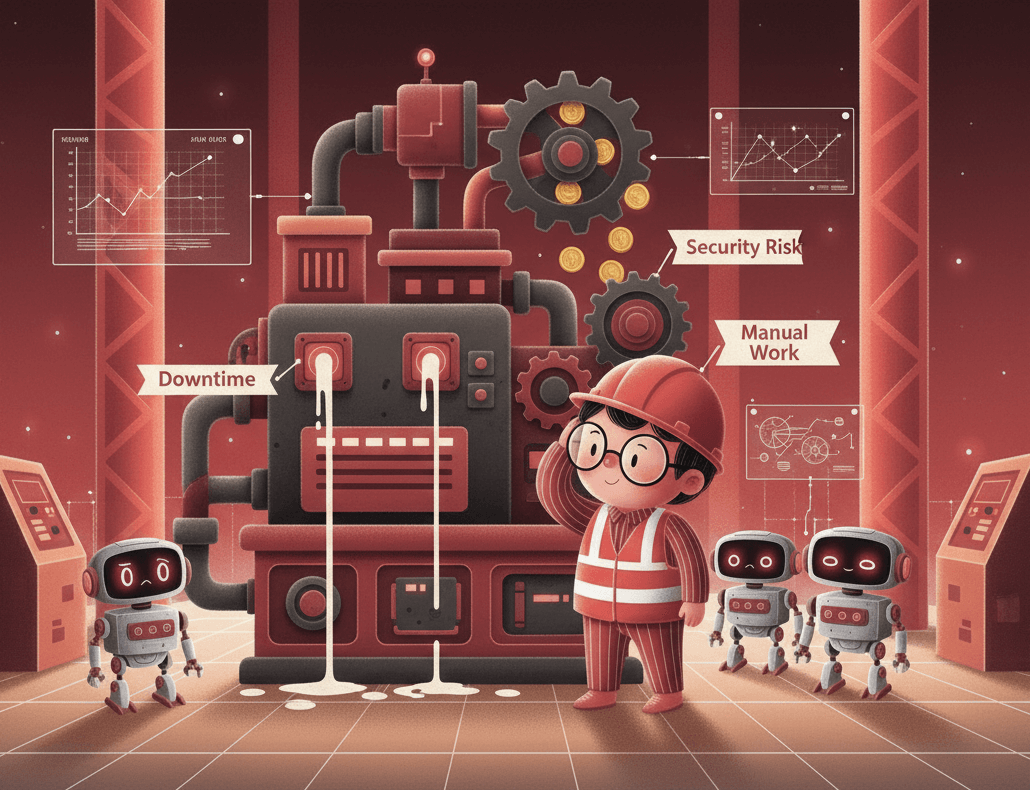
They don’t show up as a line item. They show up as:
- Delayed production runs
- Manual data entry between systems
- Reporting that takes days instead of minutes
- Machines that can’t communicate with modern software
- Increased cybersecurity exposure
These are hidden IT costs — and they compound over time.
Outdated Machines Slowing You Down?
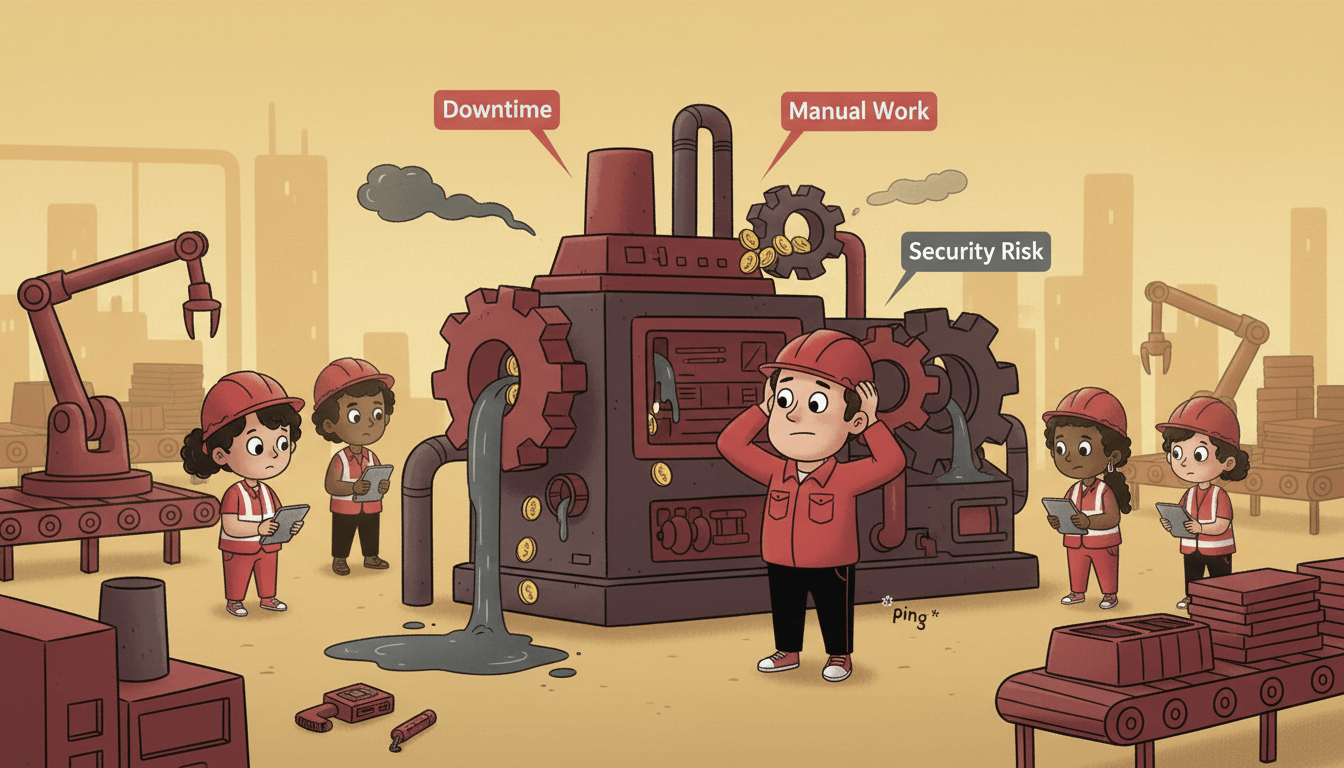
Many plants operate with equipment that still performs mechanically — but digitally, it’s disconnected.
Older PLCs. Standalone shop floor software. Accounting systems that don’t sync with production data.
When systems can’t talk to each other, your team becomes the integration layer.
That means:
- Double entry
- Spreadsheet workarounds
- Email-based approvals
- Reactive troubleshooting
The real cost isn’t just inefficiency. It’s operational drag.
The True Cost of Legacy System Fragmentation
Here’s what disconnected systems really cost manufacturing operations:
1. Production Delays
When inventory, scheduling, and machine data don’t sync in real time, small issues become large slowdowns.
2. Reporting Blind Spots
Leadership decisions are only as good as the data behind them.
Manual reports increase error rates and reduce visibility.
3. Increased Downtime Risk
Legacy systems are harder to patch, secure, and support.
When they fail, recovery takes longer.
4. Cybersecurity Exposure
Older systems often lack modern security protocols, making manufacturing firms prime ransomware targets.
5. Talent Frustration
Skilled operators and managers expect connected systems.
Inefficient workflows increase burnout.
Integrating Legacy Systems Without Chaos
Here’s the part most IT providers get wrong:
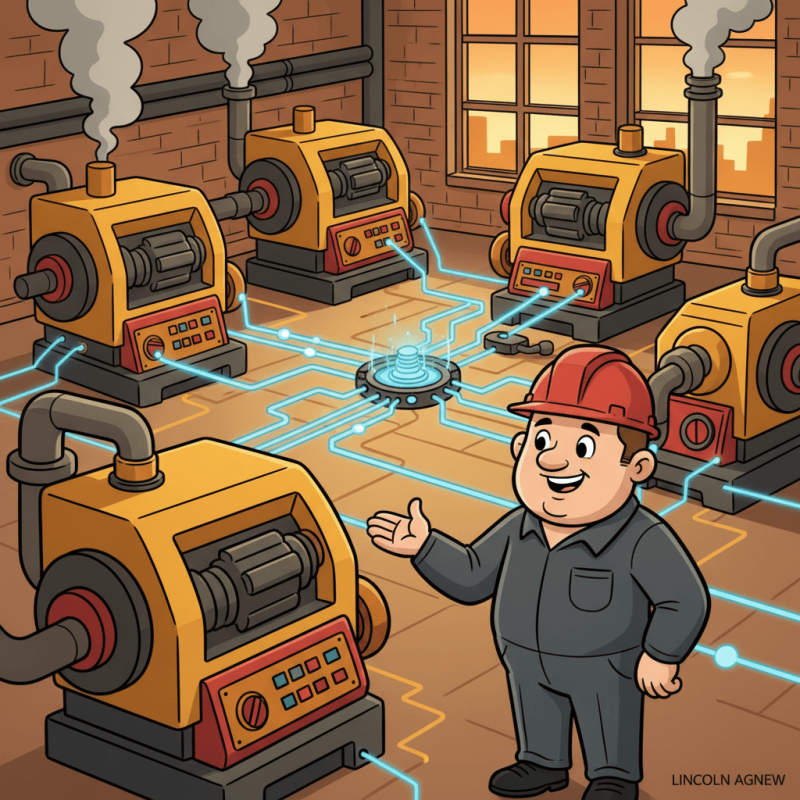
Modernization does not mean rip-and-replace.
In manufacturing, disruption is expensive. A chaotic rollout can cost more than the problem you’re solving.
A smarter approach looks like this:
Step 1: Infrastructure Audit
Map how data flows today:
- ERP
- Shop floor systems
- Accounting
- Inventory
- CRM
- Machine-level systems
Identify friction points and risk exposure.
Step 2: Stabilize First
Before integration, ensure:
- Network reliability
- Secure endpoints
- Backup and recovery readiness
- Patch management
You don’t modernize on unstable foundations.
Step 3: Strategic Integration
Use middleware, APIs, or secure connectors to bridge systems gradually.
This allows:
- Phased rollouts
- Minimal downtime
- Parallel testing
- Controlled change management
Step 4: Strengthen Security in Parallel
Manufacturing is a growing ransomware target.
Integration projects should include:
- Network segmentation
- MFA deployment
- Endpoint protection
- Secure remote access policies
Modernization without security is unfinished work.
What Modern Manufacturing IT Should Deliver
When legacy systems are integrated properly, you gain:
- Real-time production visibility
- Automated reporting
- Reduced manual entry
- Faster decision cycles
- Lower downtime risk
- Stronger cybersecurity posture
The result isn’t just efficiency. It’s operational confidence.
Manufacturing Modernization Starts With Clarity
You don’t need a complete overhaul.
You need a roadmap.
At happier IT, we help manufacturing firms:
- Identify hidden IT cost drivers
- Secure aging environments
- Integrate legacy systems strategically
- Reduce downtime risk
- Modernize without disruption
Because technology should support production — not slow it down.


